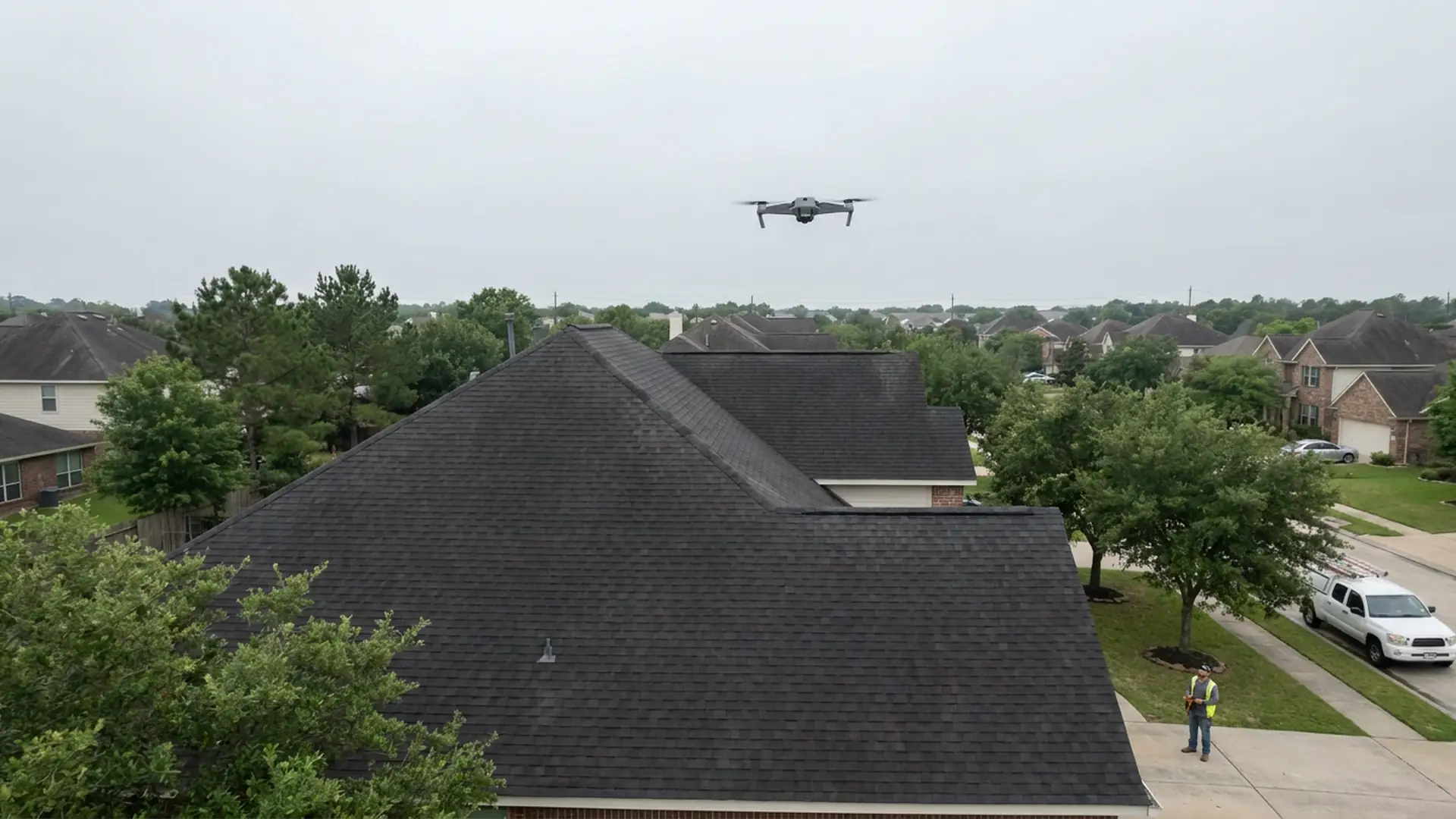
Houston, TX & the surrounding area
Drone Roof Inspection in Houston
Roof Inspection Houston arranges free roof inspections across the metro, and drones come up often enough to deserve a straight answer. Aerial imaging is a real tool that solves a real problem — some roofs should not be walked — and it is also routinely oversold. This page covers what a drone genuinely sees, what it cannot, and how to tell whether it is the right method for your roof.
- Free roof inspection
- Insured local pro
- No obligation
Free Roof Inspection
No-cost inspection, no obligation to hire
Insured Local Roof Inspectors
Get an inspection from an insured local roofing professional
Real Answers
Get real answers before you approve a repair or file a claim
A drone earns its place in three situations.
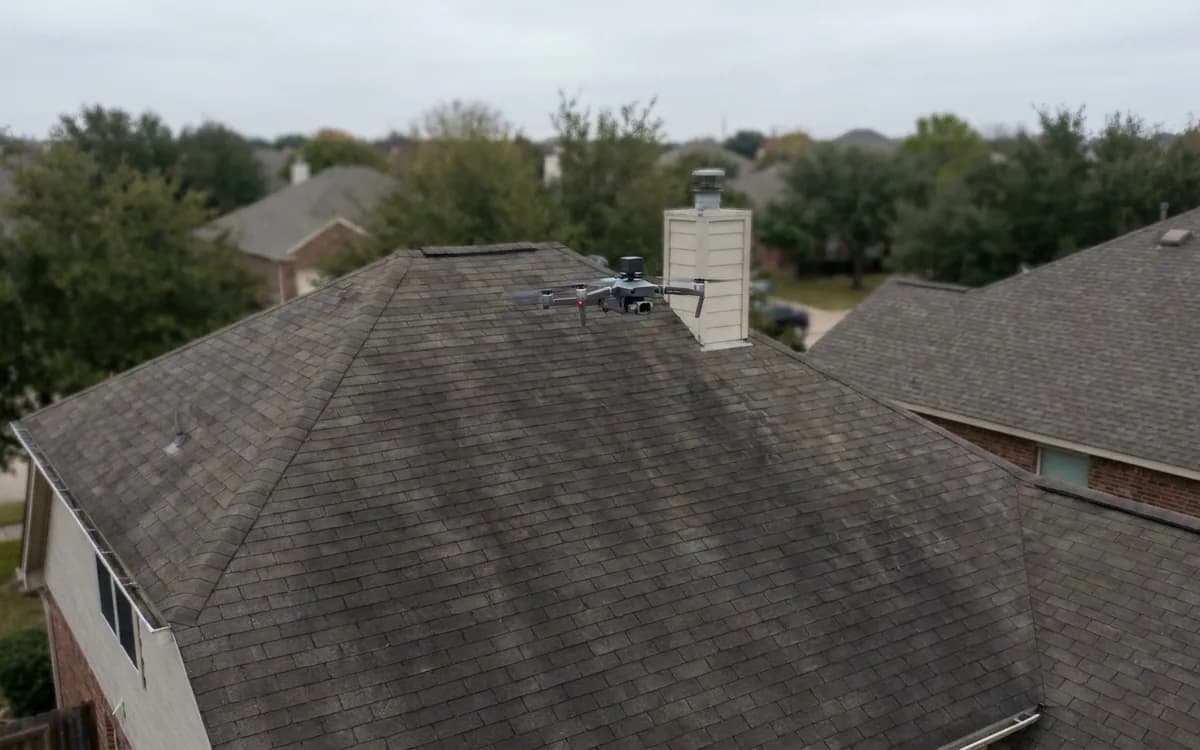
Roofs that are unsafe to walk. A steep pitch, a three-story elevation, a brittle tile or slate covering, or a roof with structural concerns are all cases where putting a person up there is the wrong call. Aerial photography gets you a look without the risk.
Speed across a large area. On a big or complex roof, a systematic flight covers ground faster than a walk does, and it produces a consistent overhead record of the whole surface rather than a series of close-ups.
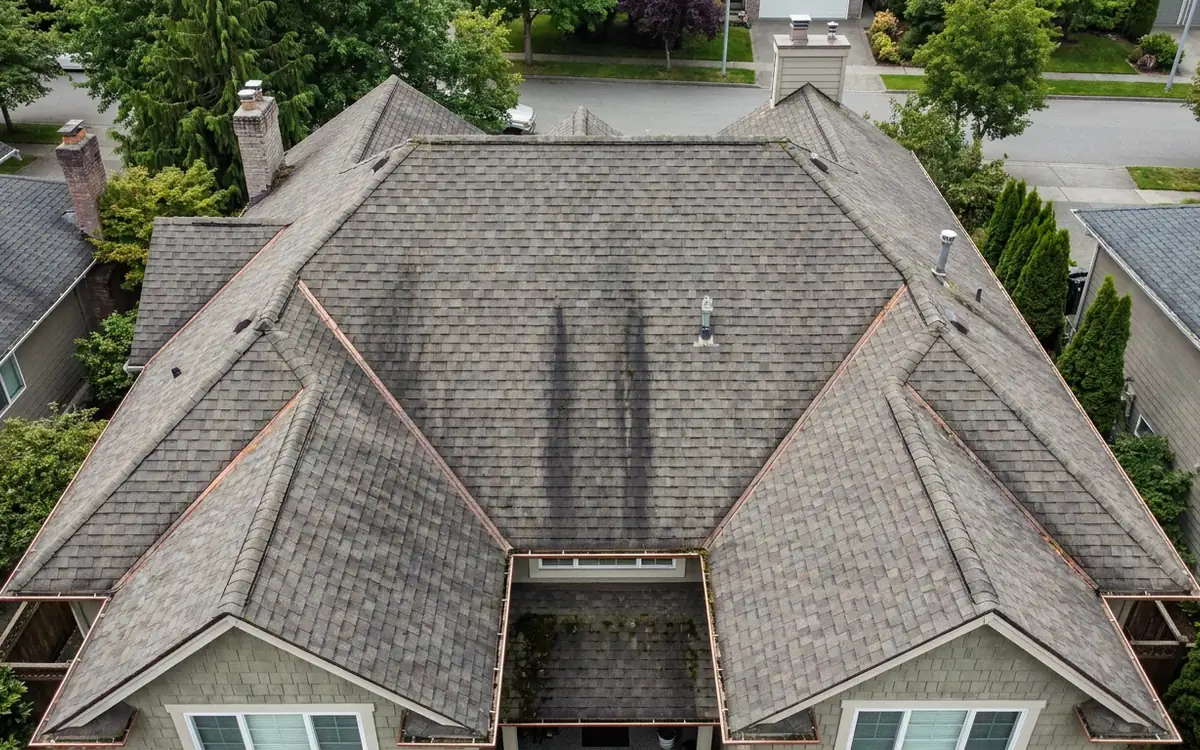
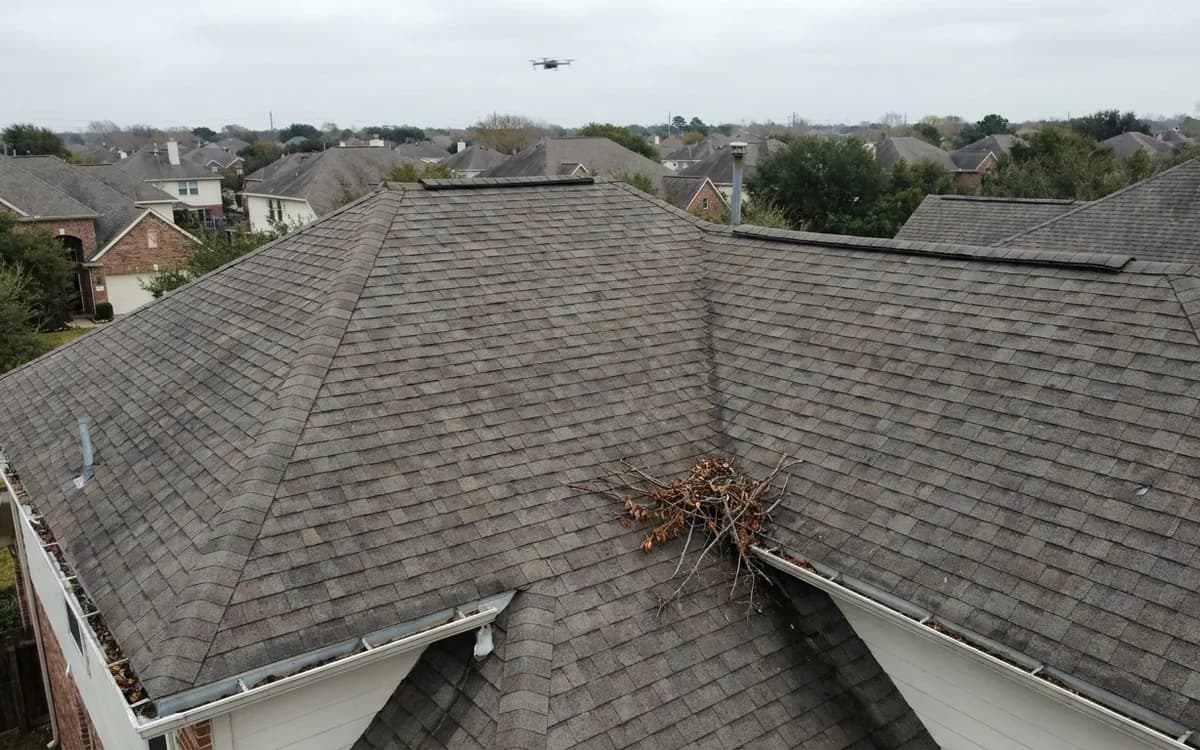
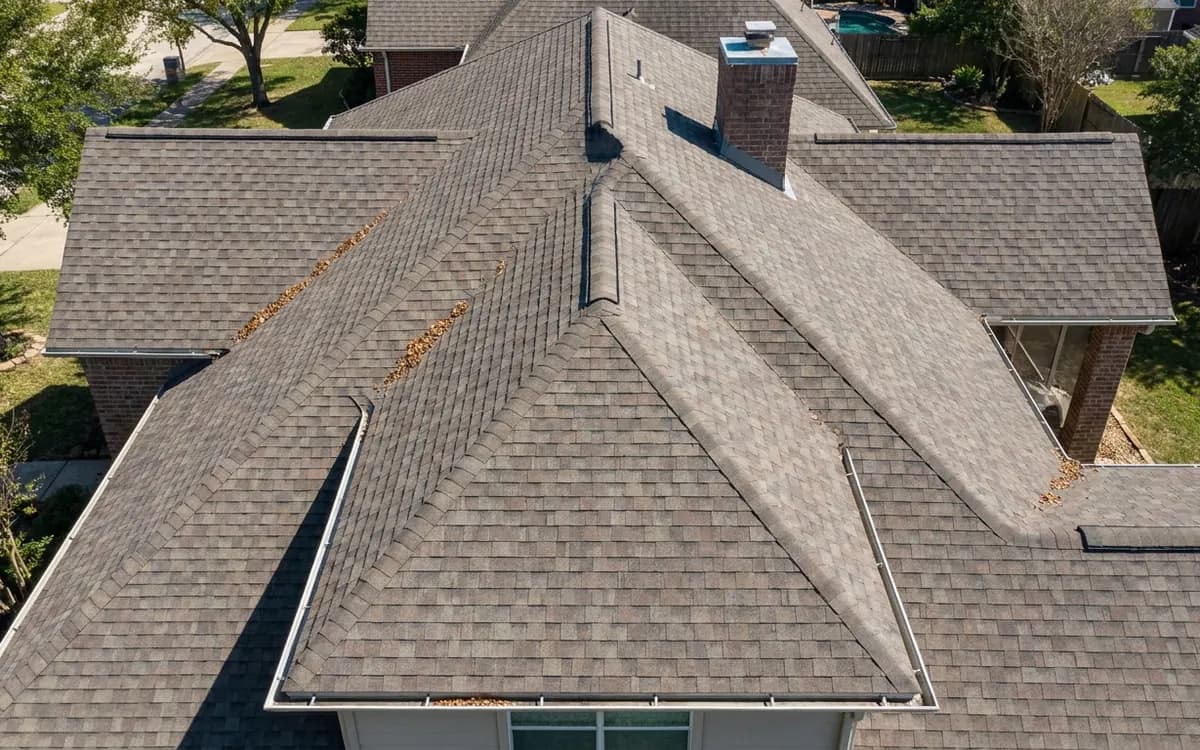
The overhead perspective itself. Some things read better from above than from on the roof — the drainage pattern across a complex roof, ponding on a low-slope section, the layout of valleys and how debris is collecting in them, the overall condition of one slope against another.
Add a fourth: the photographs are a dated record you keep. That has value independent of what the inspection concludes.
What it cannot do
This is the part that gets skipped in the sales pitch.
Some roof questions need closer access. Aerial images can record visible surface conditions, but they cannot confirm every condition that may require close inspection, physical access, or an attic review. Treat the images as useful documentation, not proof of a diagnosis or claim outcome.
It cannot lift anything. Checking whether the sealant strip has released, whether a shingle is bonded or merely lying flat, or what is happening under a piece of flashing all require a hand.
It cannot enter your attic. Conditions on the attic side of a roof system are not visible from the air. When those conditions matter, ask whether an attic review is safe and appropriate.
It has practical limits. Weather, low light, access conditions, and the roof itself can limit what an aerial visit can document.
Weather can also prevent or delay safe flight. The professional decides whether conditions permit aerial imaging that day.
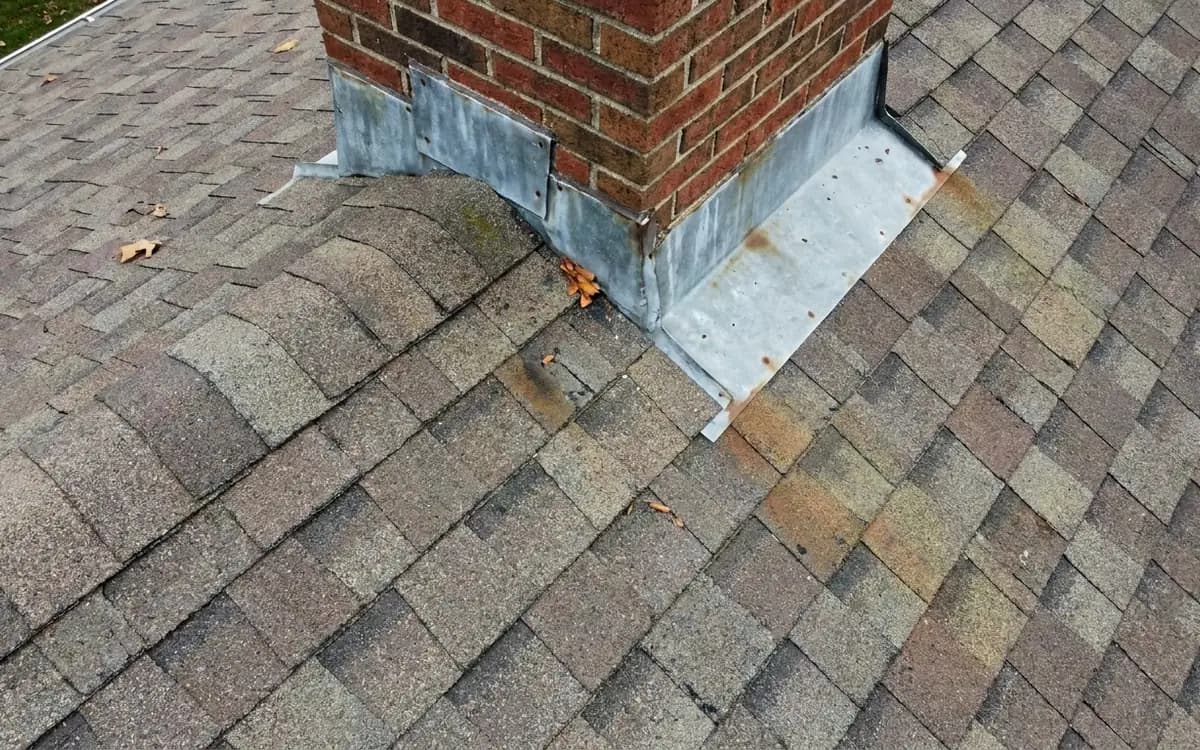
What a Drone Roof Inspection Can—and Cannot—Tell You
A drone is a useful aerial camera, not a substitute for every kind of roof assessment. The right method depends on the roof, access, weather, and the question being answered.
The best version of this is a roofing professional who uses aerial imaging as one instrument among several, walks the roof when it is safe to do so, gets into the attic, and hands you photographs with findings attached. The weakest version is a flight, a folder of images, and no interpretation.
What We Arrange
We are a referral service. We connect Houston homeowners with one independent insured local roofing professional for a free inspection. We do not operate drones, we do not perform inspections, and we cannot commit a contractor to a particular method or piece of equipment. Whether aerial imaging is used is the professional's judgment on the day, based on the roof, the access, the airspace, and the weather.
If aerial imagery specifically is what you want, tell us when you call and we will pass the request along. What we can say is that the connection is free, that there is no obligation to hire, and that we will not tell you a method has been arranged when it has not.
Questions to ask any drone operator
- What qualifications and permissions apply? Ask the operator how they handle the flight safely and lawfully at your address.
- Are you insured for the flight? Separate question from roofing liability insurance.
- Will anyone physically inspect the roof as well? If the answer is no, understand what you are and are not getting.
- Is an attic review appropriate? Aerial images cannot show attic-side conditions.
- Do I receive the images? They are your documentation. Get them.
- What is the deliverable beyond photographs? Images without findings attached are data, not an inspection.
The terms an aerial report should use
A serious aerial survey describes what it recorded and how. Resolution or ground sample distance is what determines whether a detail is legible at all; orthomosaic describes stitched overhead imagery corrected to a consistent scale, which is what makes measurements from it meaningful. Thermal or infrared imaging records surface temperature differentials, which under the right conditions — typically after sundown, when a wet substrate releases heat at a different rate than a dry one — can suggest trapped moisture, though on a residential asphalt roof the method is far less reliable than it is on a commercial low-slope membrane. Roof area is reported in squares of 100 square feet, and pitch, the rise over a 12-inch run, is the number that determined whether the roof could have been walked in the first place.
On commercial buildings the picture is different: infrared moisture surveys over low-slope membranes are an established method with real diagnostic value, and the commercial roof inspection page covers where that fits and what it costs.
Get a look at your roof
Call or use the form. Describe the roof — height, pitch, covering, and whether there is a reason it should not be walked — and note if aerial imagery is something you specifically want. The connection is free and there is no obligation to hire anyone.
Verify insurance, certification, and scope before authorizing anything. The cost guide covers where free ends and paid begins, and service areas covers the coverage map.
Questions
Frequently Asked Questions
Is a drone inspection as good as someone walking the roof?
For different questions, yes and no. A drone photographs the surface well and reaches areas that are unsafe to walk, which is genuinely useful on a steep, high, or fragile roof. What it cannot do is press a thumb into a suspected hail bruise to feel whether the mat has fractured, lift a shingle to check the sealant bond, or get into your attic. On most Houston homes the thorough answer still involves someone on the roof and in the attic.
Do I need FAA permission to have my roof flown?
You do not — the operator does. Commercial drone operation in the United States requires the pilot to hold an FAA Part 107 Remote Pilot Certificate, and controlled airspace requires authorization to fly in. That matters in Houston, where large parts of the metro sit under the controlled airspace around Bush Intercontinental, Hobby, and Ellington. Ask any operator for their Part 107 certificate and how they handle airspace authorization at your address.
Will a drone inspection satisfy an insurance adjuster?
Aerial photographs are useful documentation and carriers use drones themselves. Whether images alone support a specific claim depends on the damage type and the carrier — hail claims in particular often turn on findings that require physical contact with the surface. Treat drone imagery as one part of a documentation file rather than the whole of it.
Can a drone see under the shingles?
No. Standard aerial photography records the visible surface. Thermal imaging from a drone can suggest temperature anomalies that sometimes indicate trapped moisture, but interpreting that reliably requires the right conditions and an operator who knows the method's limits. Neither approach tells you the condition of the decking underneath, which is an attic question.
Is the free inspection you arrange a drone inspection?
Not by default. The free connection we arrange is with an independent local roofing professional, and the method they use is theirs to determine based on the roof, the access, and the conditions on the day. If you specifically want aerial imagery, say so when you call and we will pass it on — but we cannot promise a particular method or piece of equipment on your behalf.
Ready to get started?
Ready for a free inspection? Get connected with a local, insured roofing professional. Straight answers, clear scope, and no obligation to hire.