Roof Inspection Houston

Houston, TX & the surrounding area

Roof Inspection for an Insurance Claim in Houston

Roof Inspection Houston arranges free roof inspections across the metro, and an insurance claim is one of the situations where what you have written down matters as much as what is on the roof. This page is about the documentation side: what to gather, how the adjuster's visit differs from yours, and what to do when the two disagree.

If you are trying to establish whether a specific storm damaged your roof at all, start at storm damage roof inspection — that page covers what hail and wind leave behind. This one picks up at the paperwork.

  • Free roof inspection
  • Insured local pro
  • No obligation

Get Your Free Inspection

Tell us what’s going on — or call (713) 903-8195.

Your details go to one local pro — no spam, no obligation.

Insured Local Contractor

The pro we refer is an independent, insured local business

Free Roof Inspection

No-cost inspection, no obligation to hire

One Local Pro, Not a Call List

Your details go to one pro, no spam

Your inspection and the adjuster's inspection are different events

This is the distinction most homeowners learn late.

The adjuster's inspection happens after you file. The carrier assigns someone, they come out, they assess damage against the policy, and their findings drive the settlement figure. They are competent professionals doing a defined job, and that job is determining the carrier's exposure. They are not there to advocate for you.

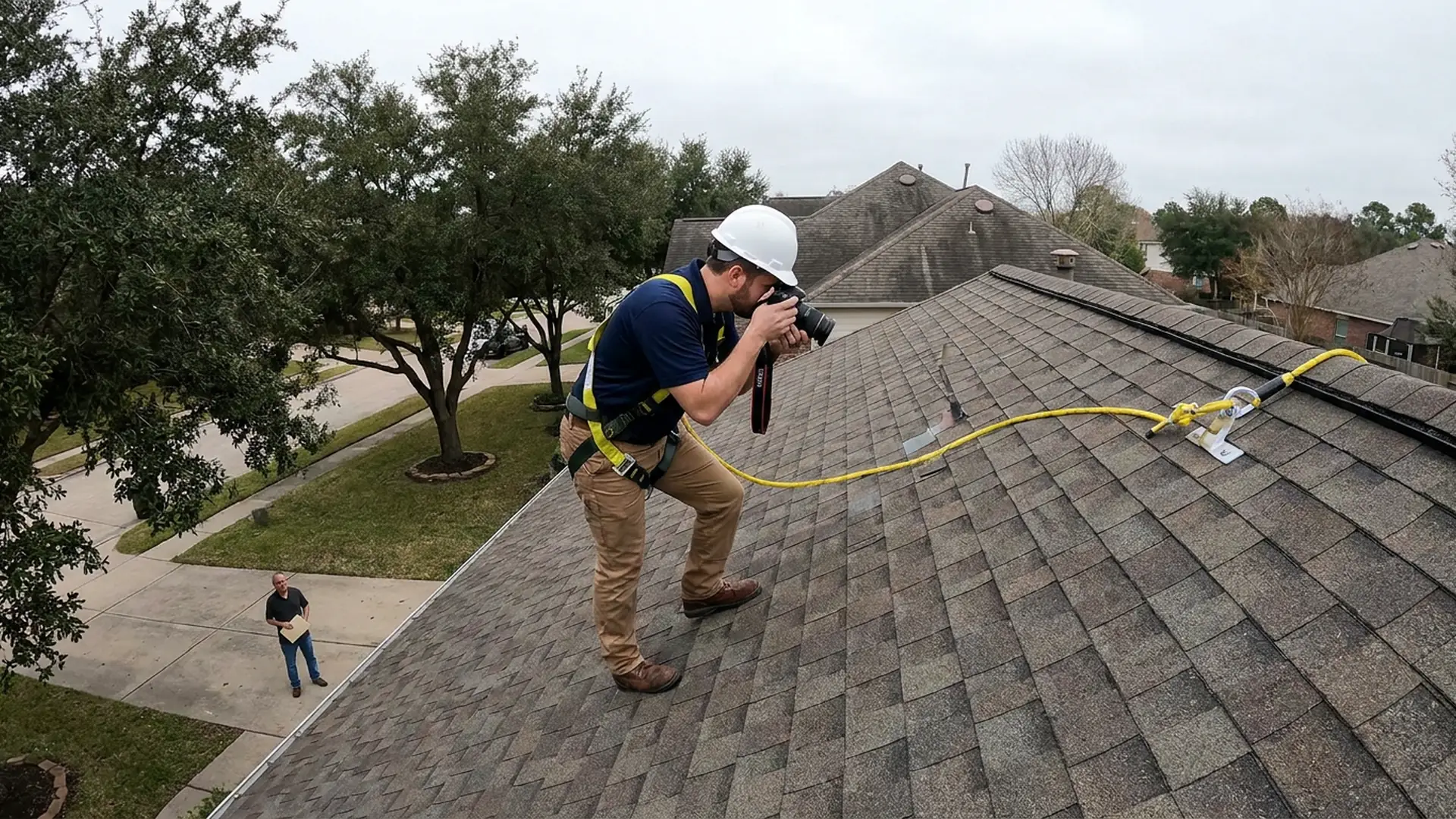
Your inspection is the one you arrange, and its purpose is to know what is on your roof before somebody else tells you. It gives you three things the adjuster's visit cannot: a dated record from before the claim was decided, a set of photographs you control, and a technical reading of the damage you can hold up against the adjuster's report.

Neither replaces the other. The point of having both is that you can tell when they disagree, and about what.

What to document, and when

The moment after a storm is when evidence is cheapest to collect and easiest to lose.

The storm date. Specific, not "last month." Coverage frequently turns on attributing damage to a covered event on a particular date.

Ground-level photographs, immediately. Before any repair, before any tarp, before anything moves. Wide shots showing the whole elevation and closer shots of anything visible. Do not climb onto a wet or damaged roof to get better ones — ground level is genuinely fine and a fall is a worse outcome than a mediocre photograph.

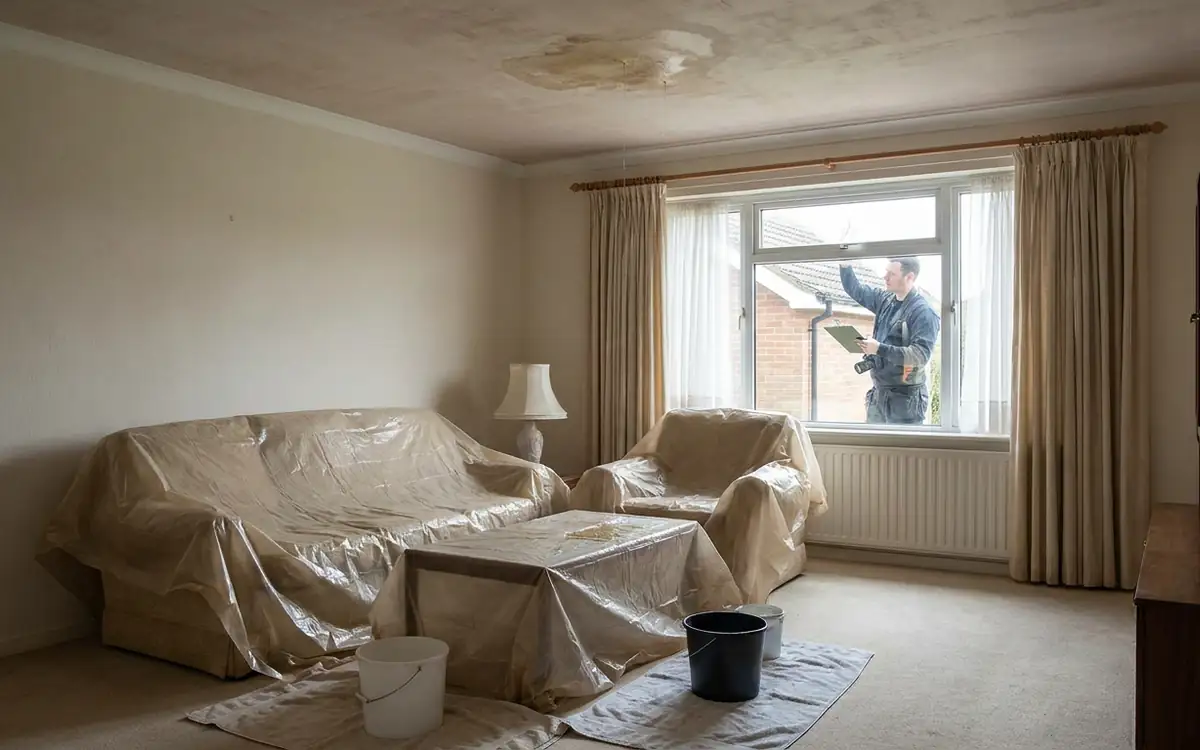
Interior evidence with dates. Which room, which ceiling, when the stain appeared, whether it grew. Photograph it as it develops rather than once at the end.

Receipts for temporary protection. Tarps, boards, a plumber, a water extraction service. Reasonable emergency mitigation is commonly reimbursable, and it is reimbursable against receipts.

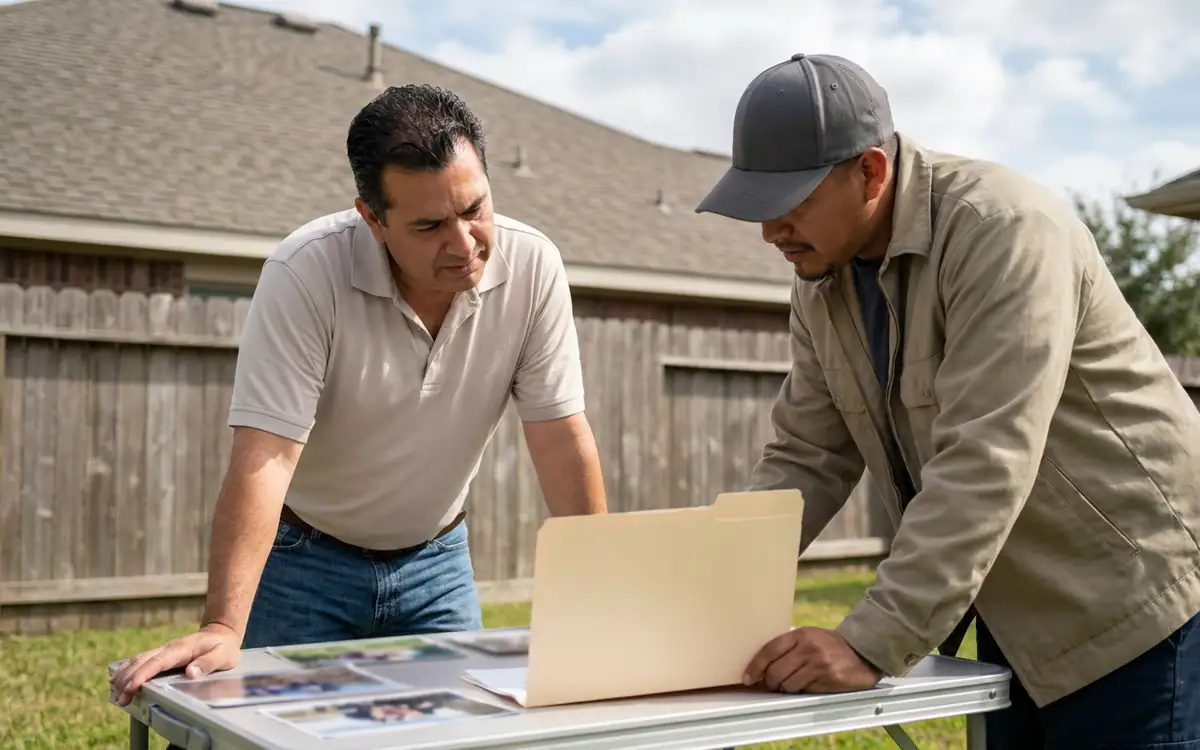
The professional's findings. Photographs keyed to locations on the roof, a written description of each finding, and a separation of storm-attributable damage from ordinary wear. That last distinction is the one carriers scrutinize hardest.

Prior condition, if you have it. An inspection report from before the storm is unusually valuable, because the most common basis for reducing or denying a roof claim is that the damage predates the event.

What a claim-grade finding looks like

A note saying "roof damaged by hail" is not documentation. A finding that supports a claim reads more like a survey.

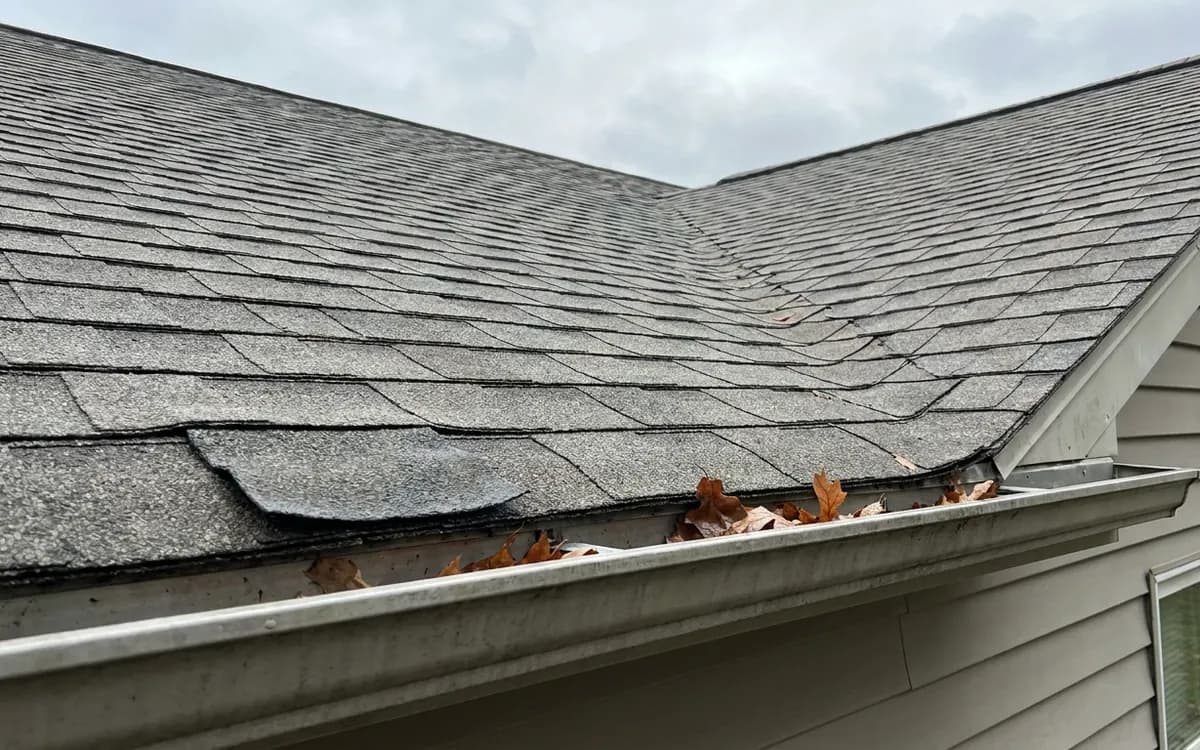
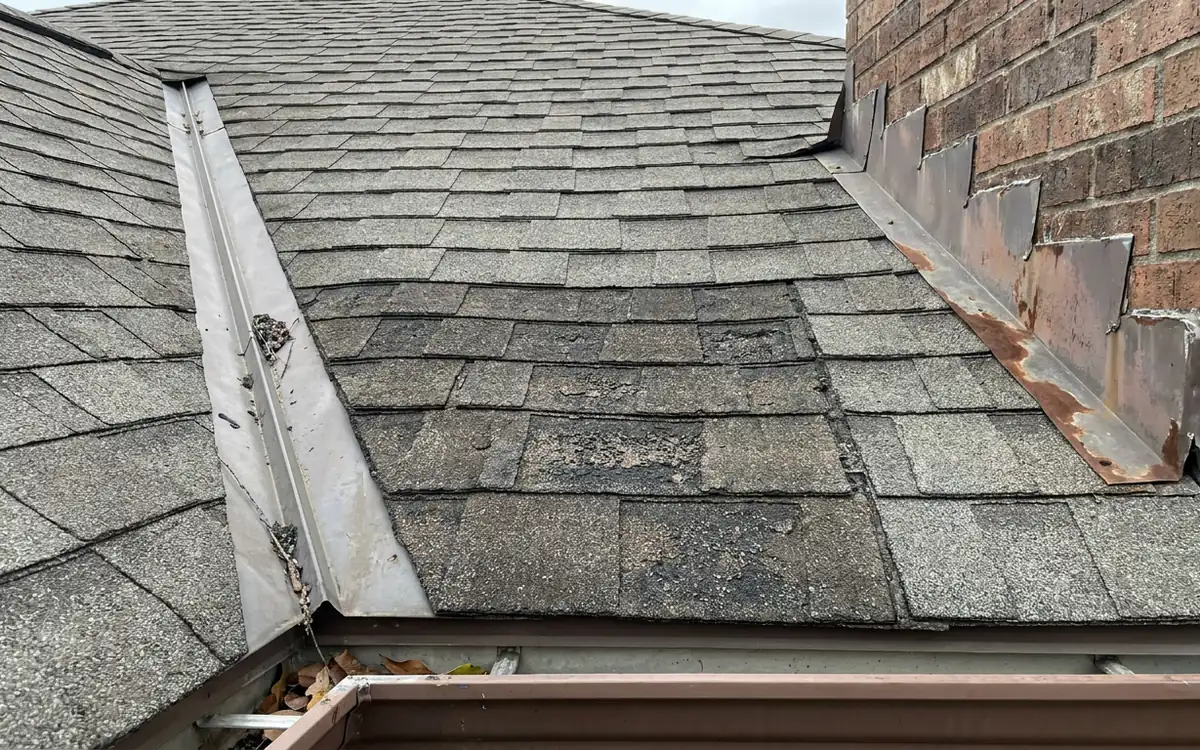
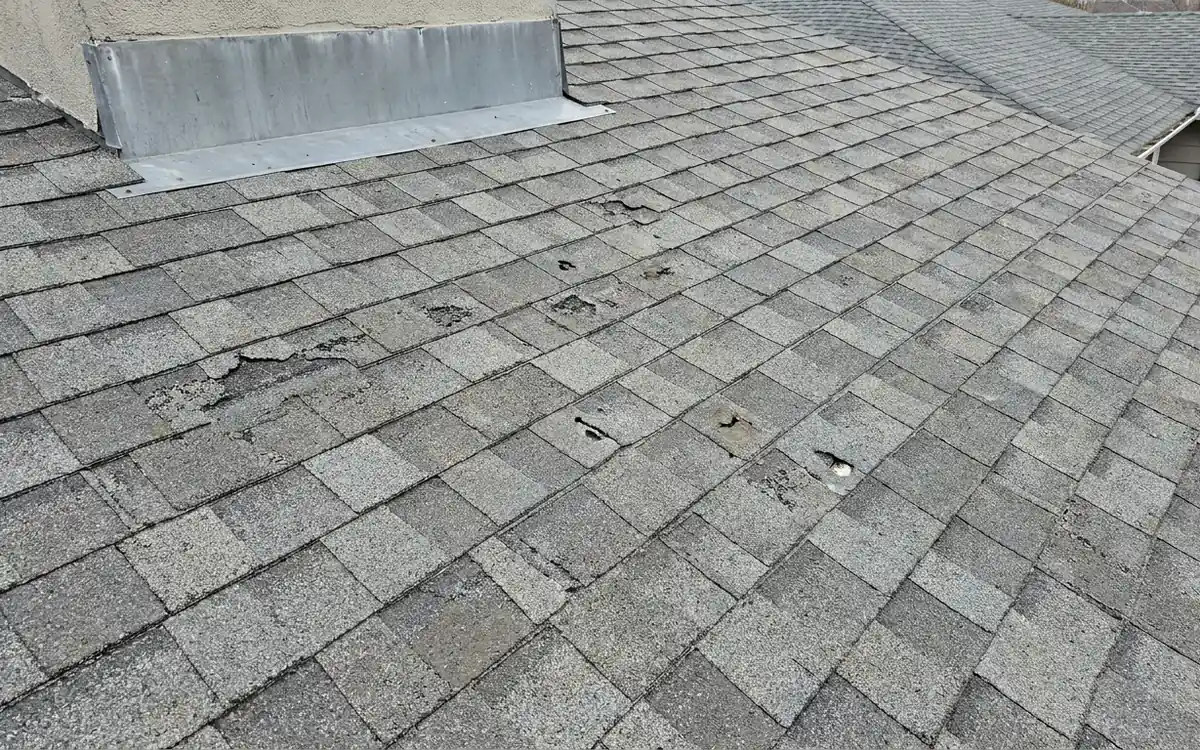
It identifies the damage type specifically — hail bruising, wind uplift at the sealant strip, mechanical damage from debris, flashing displacement — because these have different signatures and a carrier's adjuster knows the difference. It gives location and density: which slopes, how many impacts in a test square, whether the pattern is consistent with directional wind. It photographs each finding individually rather than offering one wide shot. It notes collateral evidence on soft metals, vents, and gutters, which is often what distinguishes a real hail event from claimed damage. And it states plainly which observed conditions are not storm-related, because a report that attributes everything to the storm reads as advocacy and gets discounted accordingly.

Two Houston specifics that decide claims

The windstorm line runs down Highway 146. The Texas Windstorm Insurance Association is the state's insurer of last resort for wind and hail, and its eligible area covers the fourteen first-tier coastal counties plus the portion of Harris County east of Highway 146 — La Porte, Morgan's Point, Pasadena, Seabrook, and Shore Acres are inside that boundary and most of Houston is not. If you are east of 146, your wind and hail coverage may sit with a different carrier than your homeowners policy, on separate paperwork, with its own inspection requirements. Establish which policy the damage belongs to before you file. Filing on the wrong one costs weeks you may not have.

Replacement cost versus actual cash value decides older roofs. The Texas Department of Insurance publishes the arithmetic plainly: on a $10,000 roof replacement with a $4,000 deductible, a replacement-cost policy pays $6,000 regardless of the roof's age, while an actual-cash-value policy pays $4,500 on a five-year-old roof, $3,000 on a ten-year-old roof, and nothing at all on a twenty-year-old roof — because depreciation has already reduced the roof's value below the deductible. Read your declarations page and find out which one you have before you file, not after the settlement letter explains it to you.

If the claim comes back denied or short

A denial letter states a reason, and the reason determines what to do next.

"Wear and tear" or "pre-existing condition" means the carrier concluded the damage predates the event. The counter is dated evidence and a technical reading distinguishing impact damage from age-related deterioration.

"Cosmetic damage" means the carrier accepts marks exist but disputes they affect function. This turns on whether granule loss and bruising have compromised the covering's water-shedding capability — a technical question with a technical answer.

"Below deductible" means the assessed damage was valued under your deductible. If the assessment missed slopes or under-counted, the figure changes.

Partial payment covering one slope when several took damage is common and is worth questioning with specifics.

In each case the response is the same shape: identify precisely what the carrier's finding says, obtain documentation that addresses that specific point, and request reconsideration in writing. Texas has a Department of Insurance complaint process if the disagreement cannot be resolved with the carrier directly, and public adjusters and attorneys exist for claims where the amount justifies them. We are none of those things and cannot advise you on any of it.

The words that appear in a claim file

Adjusters and contractors write in the same vocabulary, and reading it makes the file legible. Uplift is the suction force that removes material from a roof edge — wind does not push shingles off, low pressure above the surface pulls them. The sealant strip is the adhesive band bonding each course to the one below, and wind damage frequently means that bond broke rather than that the shingle tore. Shingles carry a wind-resistance classification under ASTM D7158, where Class D is tested to 115 mph and Class H to 150 mph, or under the older ASTM D3161, where Class F covers 110 mph — laboratory ratings on correctly installed material, not a guarantee against a given storm. Impact-resistant coverings are classified UL 2218 Class 1 through 4, and Class 4 earns a mandated premium credit in Texas, though only when the material carries the manufacturer's classification label and the installing contractor completes TDI form PC068 afterward. Damage is measured in squares of 100 square feet, and a test square is the marked area an adjuster counts impacts within to extrapolate density across a slope.

What we are, plainly

We are a referral service. We connect Houston homeowners with one independent insured local roofing professional for a free inspection. We are not adjusters, not public adjusters, not attorneys, not your insurer, and not the contractor. We do not file claims, negotiate settlements, or produce claim reports, and nothing here is a coverage opinion — verify your own policy with your carrier or agent.

No honest roofer will promise you a claim approval. If one does, that is the most useful thing you will learn from the conversation.

Get the damage documented

Call or use the form. Tell us the storm date, what you have seen from the ground, whether you have filed yet, and whether an adjuster has already been out. If the claim is already denied, say so and say what reason the letter gave — it changes what documentation is worth gathering.

The cost guide covers when a paid independent report is the better instrument, and service areas covers where across the metro this runs. If the damaged property is a rental you own, rental property roof inspection covers the habitability side, and if you are selling into a claim, before selling a house covers disclosure.

Questions

Frequently Asked Questions

Will my insurance company inspect my roof?

Yes — once you file, the carrier assigns an adjuster who inspects on the carrier's behalf. That inspection determines what the carrier pays. It is not an independent assessment and it is not working for you, which is precisely why having your own documented findings before or alongside it changes the conversation.

How long does an insurance adjuster take to inspect a roof?

It varies enormously with conditions. A routine single-property claim in a quiet week may be inspected within days. After a widespread hail or wind event across the metro, adjusters are triaging thousands of properties and the wait stretches considerably. Texas sets statutory deadlines for acknowledgment and decision on claims, so ask your carrier what those dates are for your claim and note them.

Should I get my own inspection before I file?

It is usually worth it. Filing without knowing what is actually wrong means you are asking the carrier a question you cannot check the answer to. Your own documented findings, dated and photographed, give you a basis for reading the adjuster's report and a starting point if you disagree with it.

What if my roof claim was denied?

A denial is a decision, not the end of the process. Read the denial letter for the stated reason — wear and tear, pre-existing condition, cosmetic damage, deductible not met — because the reason determines the response. Independent documentation that contradicts the stated basis is what a reconsideration request is built on. We are not adjusters or attorneys and cannot advise on the claim itself.

Does an inspection guarantee my claim gets paid?

No, and anyone who tells you otherwise is selling something. A contractor documents what is on the roof. The carrier decides coverage based on your policy, the cause of loss, exclusions, your deductible, and its own adjuster's findings. Documentation improves the quality of the conversation; it does not decide it.

Ready to get started?

Ready for a free inspection? Get connected with a local, insured roofing professional. Straight answers, clear scope, and no obligation to hire.

Call (713) 903-8195Get Free Inspection